
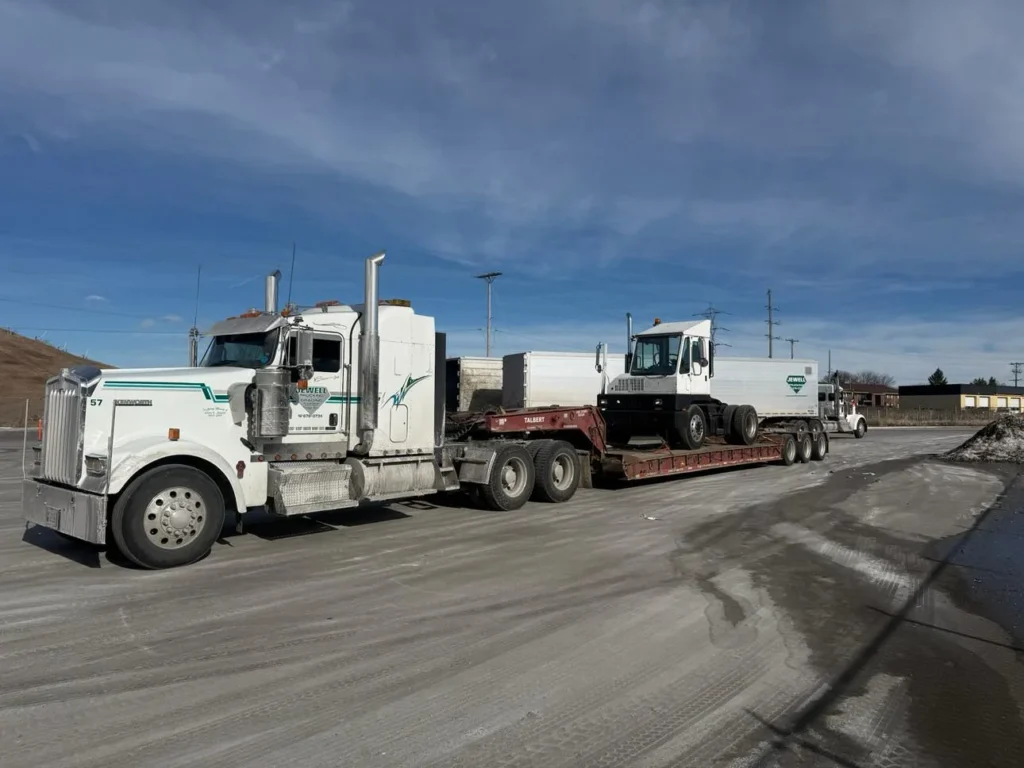
Moving heavy equipment is not like hauling a load of gravel or picking up a roll-off container. It’s a specialized, high-stakes operation that requires the right equipment, the right experience, and the right team. Whether you’re transporting a bulldozer to a new job site, moving an excavator across the state, or relocating a fleet of machinery for a large construction project, the company you trust with that equipment can make all the difference.
Unfortunately, not every hauling company is equipped to handle heavy equipment transport safely and efficiently. As a result, contractors, construction companies, and equipment owners across Southeast Wisconsin need to know exactly what to look for before they hand over the keys. At Jewell Trucking, we’ve been hauling heavy equipment and oversized loads for decades — and in this article, we’re sharing everything you need to evaluate a hauling partner before you commit.
Why Heavy Equipment Transport Is Different
Heavy equipment transport carries risks and complexities that standard freight hauling simply doesn’t. Consequently, it demands a higher level of expertise, preparation, and attention to detail at every stage of the job.
For starters, heavy equipment is expensive. A single piece of machinery can represent hundreds of thousands of dollars of investment — and any damage during transport can mean costly repairs, project delays, and lost revenue. Furthermore, oversized loads often require special permits, specific routing, and in some cases escort vehicles to move legally and safely on public roads.
Additionally, loading and securing heavy equipment correctly is a skill in itself. Improper loading or inadequate tie-down procedures can result in shifting loads, equipment damage, or — worst case — a dangerous situation on the highway. Therefore, knowing what qualifies a hauling company to do this work is essential before you let anyone touch your equipment.
1. Verify They Have the Right Equipment
The most fundamental question to ask any hauling company is whether they have the right trailer and truck for your specific piece of equipment. Not all heavy equipment can be transported on the same type of trailer, and using the wrong setup creates serious safety and legal risks.
Here are some of the most common trailer types used in heavy equipment transport and what they’re suited for:
- Flatbed trailers — ideal for equipment that is not too tall and can be loaded from the rear or side; widely used for compact machinery, skid steers, and smaller tracked equipment
- Step deck (drop deck) trailers — the lower deck height accommodates taller equipment that would exceed height limits on a standard flatbed
- Lowboy trailers — designed specifically for the heaviest and tallest equipment, including bulldozers, large excavators, and cranes; the extremely low deck keeps the overall transport height within legal limits
- RGN (Removable Gooseneck) trailers — the gooseneck detaches so equipment can be driven directly onto the trailer, ideal for wheeled and tracked machines that can be self-loaded
Before booking any transport, confirm that the hauling company owns or has access to the right trailer for your equipment’s weight, dimensions, and loading requirements. Furthermore, ask about the condition and maintenance history of their equipment — a well-maintained trailer is a sign of a professional operation.
2. Check Their Permitting Knowledge and Experience
In Wisconsin and across the Midwest, transporting oversized or overweight loads requires special permits from the Wisconsin Department of Transportation (WisDOT). These permits specify approved routes, travel time restrictions, and in some cases escort vehicle requirements. Failing to obtain the correct permits — or traveling on a non-approved route — can result in fines, delays, and significant liability.
A reputable hauling company handles permitting as a routine part of the job. If a company seems unfamiliar with the permitting process or suggests you don’t need permits for a clearly oversized load, that’s a serious red flag. The Wisconsin DOT’s oversize/overweight permit system provides detailed information on requirements, and an experienced hauling company should be well-versed in navigating it on your behalf.
Additionally, ask whether the company has experience with multi-state transport if your equipment is crossing state lines. Each state has its own permitting requirements, and coordinating those permits requires knowledge and relationships that not every company has.
3. Ask About Their Tie-Down and Securement Procedures
Properly securing heavy equipment for transport is non-negotiable. The Federal Motor Carrier Safety Administration (FMCSA) sets specific requirements for cargo securement — including the number, type, and placement of tie-downs based on the weight and dimensions of the load. However, meeting the minimum legal standard and doing the job right are not always the same thing.
When evaluating a hauling company, ask specifically about their securement process:
- What type and rating of chains, binders, and straps do they use?
- How do they block and brace equipment to prevent shifting?
- How do they protect painted surfaces, hydraulic lines, and sensitive components during loading and transport?
- Do they conduct a mid-trip inspection to check that everything remains secure?
- Are their drivers trained specifically in heavy equipment securement?
A company that takes securement seriously will have clear, confident answers to all of these questions. As a result, you’ll feel a lot better about handing over your equipment knowing it’s in capable hands.
4. Evaluate Their Insurance Coverage
Heavy equipment transport carries significant financial risk. Therefore, the hauling company you choose must carry adequate insurance to protect your investment in the event of an accident, damage, or loss during transport.
At a minimum, ask for proof of the following:
- Commercial auto liability insurance — covers damage or injury caused by the hauling vehicle on public roads
- Cargo insurance — covers your equipment if it is damaged, lost, or destroyed during transport
- General liability insurance — covers property damage or bodily injury that occurs during loading, unloading, or at the job site
Don’t just take a company’s word for it — ask to see current certificates of insurance and verify that the coverage limits are appropriate for the value of your equipment. Furthermore, check that the policy is active and hasn’t lapsed. A reputable company will have no hesitation providing this documentation upfront.
5. Look for Proven Industry Experience
Heavy equipment transport is not something a company learns on the fly. Experience matters enormously — both in terms of safe execution and in handling the unexpected situations that inevitably come up during complex hauls.
When evaluating a hauling company’s experience, consider:
- How long have they been in business? A company with decades of experience has worked through challenges that newer companies haven’t encountered yet.
- What types of equipment have they hauled? Ask for specific examples similar to your machine.
- Do they have experience in your region? Local knowledge of roads, weight restrictions, and bridge clearances is invaluable.
- Can they provide references from other equipment owners or contractors? A reputable company should have no trouble connecting you with satisfied clients.
At Jewell Trucking, we’ve been hauling heavy equipment and oversized loads for contractors and businesses across Southeast Wisconsin since 1974. Moreover, our team brings firsthand knowledge of the roads, regulations, and logistical realities of operating in this region — which means fewer surprises and smoother transport for our clients.
6. Prioritize Communication and Reliability
Once your equipment is on a trailer and rolling down the highway, you want to know it’s in good hands and that someone will keep you informed throughout the process. Consequently, the communication style and reliability of a hauling company matters just as much as their technical capabilities.
Look for a company that:
- Gives you a clear, realistic timeline from the start
- Communicates proactively if anything changes — weather delays, permit issues, or routing adjustments
- Has a direct point of contact you can reach by phone — not just a general customer service line
- Confirms pickup and delivery details well in advance so there are no last-minute surprises
- Follows up after the job to make sure everything went as expected
As a family-owned and operated business, Jewell Trucking prides itself on exactly this kind of personal, responsive communication. When you work with us, you’re talking directly with people who are invested in getting your equipment where it needs to go safely and on time.
7. Consider Their Full Range of Services
Heavy equipment transport is often just one piece of a larger project. Therefore, working with a hauling company that offers a broader range of services can simplify your logistics significantly. For example, if you also need debris hauled from a construction site, materials delivered, or roll-off containers for a cleanup, having one trusted partner handle it all is a major advantage.
At Jewell Trucking, we offer a full suite of services beyond heavy equipment transport — including roll-off dumpster rentals, bulk material delivery, dump trucking, walking floor trailer hauling, snow plowing, and brush mowing. To explore everything we can do for your operation, visit our hauling services page. Having one reliable company handle multiple aspects of your project saves time, reduces coordination overhead, and builds the kind of long-term relationship that makes every future job easier.
Quick Checklist: What to Ask Before You Book
Before committing to any hauling company for heavy equipment transport, run through this checklist:
- Do they have the right trailer type for your equipment’s weight and dimensions?
- Are they experienced with the permitting process for oversized loads in Wisconsin?
- Can they clearly explain their securement and tie-down procedures?
- Do they carry adequate cargo and liability insurance — and can they provide certificates?
- How long have they been in business, and do they have relevant references?
- Is communication prompt and professional from the first contact?
- Can they handle other hauling needs beyond the equipment transport itself?
Taking the time to ask these questions upfront protects your equipment, your project timeline, and your budget. Furthermore, the answers will quickly tell you whether you’re dealing with a company that treats heavy equipment transport as the serious, specialized work it is.
Trust Jewell Trucking With Your Next Heavy Equipment Move
Heavy equipment transport is a big deal — and you deserve a hauling partner who takes it as seriously as you do. At Jewell Trucking, we bring over 50 years of experience, a well-maintained fleet, deep knowledge of Wisconsin’s permitting requirements, and the kind of personal, accountable service that keeps contractors and equipment owners coming back year after year.
We’re proud to be BBB A+ rated and WBENC certified, and we serve clients throughout Waukesha, Milwaukee, Racine, Ozaukee, and Washington counties — with the ability to travel beyond Southeast Wisconsin for the right jobs. Whether you need a single piece of equipment moved across town or a fleet transported across state lines, we’re ready to get it done safely and on time.
Give us a call at 262-679-0734 or visit jewelltrucking.com to request a free quote. We’d love to earn your trust on your next haul!

